
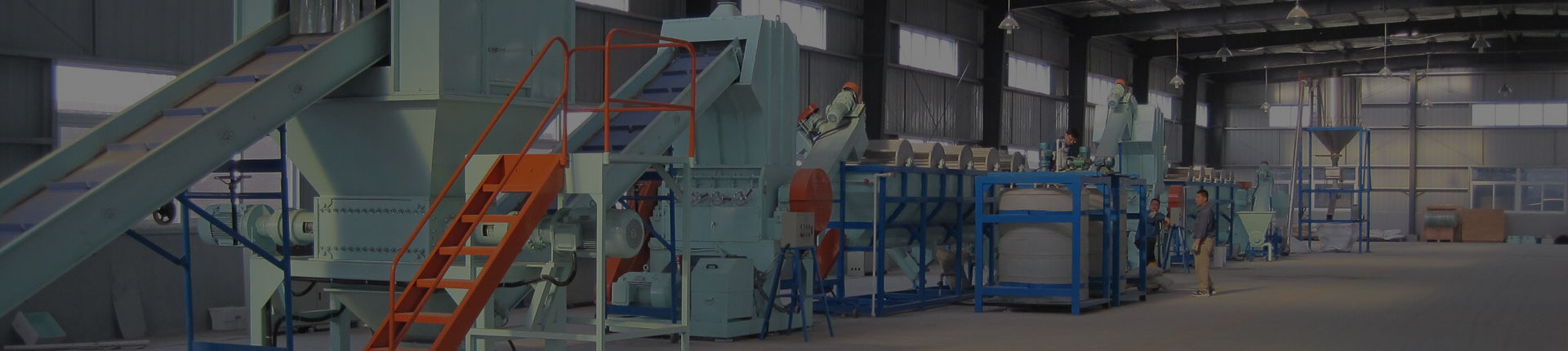
A PLA Crystallizer exists because PLA behaves nothing like PET in the dryer, and most processors learn that the hard way. PLA softens at around 55-60°C, well below the temperatures used for other polyesters, so amorphous pellets turn tacky, clump together, and block the dryer. Crystallization solves that problem by changing the pellet itself. This article explains what the process does, why skipping it costs you a full day of drying time, and which parameters actually matter.
What Is a PLA Crystallizer?
The name is slightly misleading, so it is worth being precise about what the machine does and does not do.
It Changes the Pellet, Not the Moisture
A crystallizer is not a dryer. It does not remove water. What it does is heat the pellets above the glass transition temperature so the polymer chains can rearrange into an ordered, crystalline structure. That structural change alters how the pellet behaves at temperature. Once crystallized, the material stays free-flowing at temperatures that would previously have turned it into a sticky mass. The drying that follows is a separate step — but crystallization is what makes an efficient drying step possible.
Why Amorphous PLA Sticks
PLA as supplied is largely amorphous, meaning its polymer chains are randomly arranged. Amorphous PLA has a glass transition temperature of roughly 55-60°C. Above that point the material softens. In a dryer running at 80°C or higher, amorphous pellets fuse at the contact points and form cakes that bridge across hoppers and block airflow. This is not a minor handling annoyance. Blocked airflow means uneven drying, and uneven drying means inconsistent melt quality downstream. A PLA Crystallizer raises crystallinity so the pellets keep their shape at those temperatures.
Key Point: The crystallizer does not dry your PLA. It changes the pellet so the dryer can do its job at a usable temperature.
Why PLA Is Harder to Dry Than PET
If you already run PET, your instincts will mislead you here. PLA is more demanding on two counts.
PLA Absorbs Moisture in Minutes
PLA is hygroscopic, and it reabsorbs moisture quickly once exposed. Dried PLA left open to workshop air can pick up enough moisture in about five minutes to undo the drying you just paid for. That has practical consequences: dried material needs to move straight into the extruder or stay sealed. Virgin PLA is typically supplied already crystallized and dried to around 400 ppm; the moment the packaging is opened, the clock starts.
Hydrolysis Breaks the Polymer Chain
Moisture in PLA at melt temperature does not simply evaporate. It attacks the ester linkages and cuts the polymer chains — a process called hydrolysis. The result is a lower molecular weight, weaker melt strength, and reduced mechanical properties in the finished part. You see it as bubbles, silver streaks, and popping at the die. Typical targets are below 200 ppm moisture using desiccant air at a -40°C dew point, with some grades specified at or below 250 ppm before extrusion. On a PLA PET Thermoforming Sheet Extrusion Line, that variation shows up as inconsistent sheet thickness and haze rather than as obvious defects.
The Real Cost of Skipping Crystallization
This is where the economics become obvious. Whether your PLA is crystallized or not determines the temperature you are allowed to dry at, and that temperature determines how long drying takes.
| Drying parameter | Amorphous PLA | Crystallized PLA |
| Drying temperature | About 40-45°C | About 65-90°C (up to 100°C for high-heat grades) |
| Typical drying time | Around 24 hours | About 4-6 hours |
| Dew point required | -40°C | -40°C |
| Main risk | Caking and blocked airflow if run hotter | Over-drying if temperature is set too high |
24 Hours at Low Temperature
Uncrystallized PLA has to be dried gently, generally in the 40-45°C range, and that low temperature means a long residence time — often around a full day. You pay for it twice: once in the energy to hold a dryer running that long, and again in the buffer inventory you need to keep production fed. And even then, the material sits close to its softening point, so any temperature excursion creates the caking problem you were trying to avoid.
4 to 6 Hours at Higher Temperature
Once crystallized, the same material can be dried at roughly 65-90°C, with some semi-crystalline high-heat grades reaching 100°C. Drying time drops to about 4-6 hours at the same -40°C dew point. That is a large operational difference: faster throughput, less buffer stock, and far more tolerance in the process. The crystallizer effectively pays for itself through dryer capacity rather than through drying quality alone.
How a PLA Crystallizer Works
The mechanism is straightforward once you know the temperature windows involved. The difficulty is control, not concept.
Heating Above the Glass Transition
PLA crystallizes in the region of 100-120°C, between its glass transition at around 60°C and its melting point at roughly 150-175°C depending on grade. The crystallizer holds the pellets in that band with agitation so every pellet is exposed evenly. Heat alone is not sufficient — the pellets must be kept moving, or they will fuse where they touch before crystallization has progressed. Temperature uniformity across the bed is the parameter that decides whether the output is consistent.
Crystallinity: How Much You Actually Need
PLA crystallizes slowly, and maximum crystallinity is limited — around 40%, with PLLA grades reaching roughly 37%. You do not need the maximum to solve the drying problem. You need enough to stop the pellets sticking at your target drying temperature. That is why nucleating agents such as talc, and plasticizers such as PEG, are used to speed the process. Note the trade-off: PEG lowers the glass transition temperature, which narrows your drying window again. If your material is heavily plasticized, confirm the settings with the equipment supplier rather than assuming standard values.
What to Look For in a PLA Crystallizer
Because the operating window is narrow relative to PET, control quality separates machines far more than nominal capacity does.
Temperature Control in a Narrow Window
Ask for the temperature tolerance across the whole bed, not just at the sensor. A machine that holds a tight band around the set point will give you consistent crystallinity; one that swings will produce a mix of crystallized and amorphous pellets, and the amorphous fraction will cake in the dryer. Also confirm the agitation design and how it avoids dead zones at the walls and discharge.
Dew Point Performance
A PLA Crystallizer Dehumidifier has to hold around -40°C dew point to reach the moisture targets PLA needs. Ask how the dew point is measured and maintained over a full shift, and what happens to performance as the desiccant saturates. A drying system that meets specification when new but drifts after a few hours will show up as intermittent bubbles in your finished parts. Lianda Machinery has built plastic processing equipment since 1998 and supplies crystallizer and dehumidifier combinations for PLA, PET, and masterbatch work — including a dedicated Masterbatch Crystallizer Dryer for colour and additive concentrates.
FAQ — Frequently Asked Questions
What temperature does PLA crystallize at?
PLA crystallizes in the region of 100-120°C, which sits between its glass transition temperature of about 55-60°C and its melting point of roughly 150-175°C depending on grade. The pellets need continuous agitation in that band, because PLA crystallizes slowly and will fuse wherever it sits still.
Can I dry PLA without a crystallizer?
Yes, but only at low temperature. Amorphous PLA must be dried around 40-45°C and typically takes about 24 hours, and it still risks caking if the temperature drifts upward. A crystallizer lets you dry at 65-90°C in roughly 4-6 hours, which is usually the stronger economic case.
How much does a PLA crystallizer cost?
Cost depends on throughput, whether the unit heats by infrared or hot air, and whether a dehumidifier is integrated. Small standalone crystallizers start in the low tens of thousands of dollars, while a combined crystallizer and desiccant drying system for a full extrusion line runs considerably higher.
Conclusion
A PLA Crystallizer answers a problem specific to PLA: the material softens below the temperatures you would normally use for drying, so amorphous pellets cake and block airflow. Crystallizing them first widens the usable drying window, cuts drying time from roughly a day to a few hours, and protects the molecular weight that hydrolysis would otherwise destroy. If you process PLA on PET assumptions, this is the step that will keep costing you.
Zhangjiagang Lianda Machinery builds PLA crystallizers, desiccant dehumidifier systems, and complete drying setups for PLA, PET, and masterbatch lines. Send us your material grade and throughput, and our engineers will recommend the right configuration. Contact us today for a free consultation and equipment quote.
Post time: Oct-10-2026