
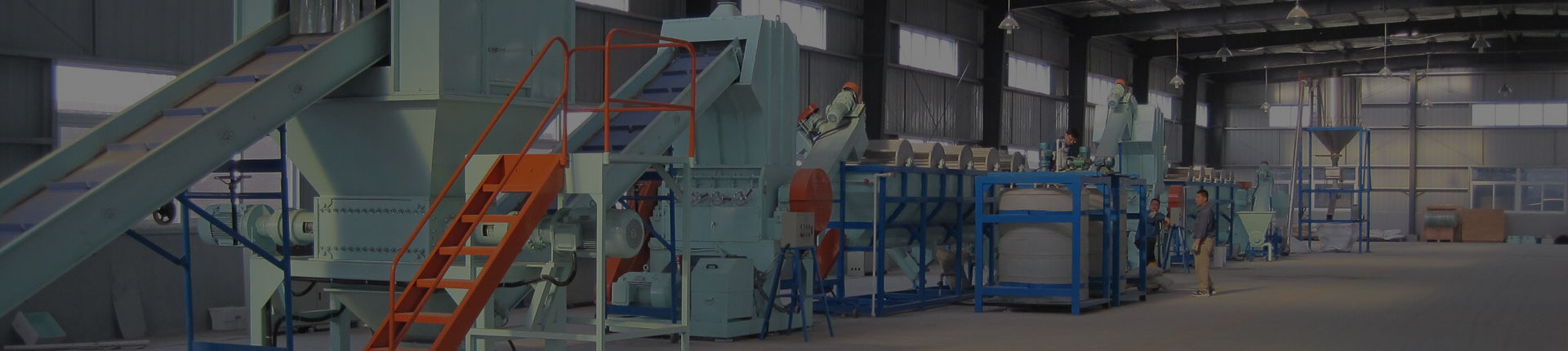
If you work in plastic recycling, you know that drying PET is not as simple as it sounds. Many recyclers struggle with poor crystallization, leading to low-quality output and equipment downtime. A PET Crystallizer solves this problem by transforming amorphous PET into a stable crystalline form before drying. In this guide, we will explain how a PET crystallizer dryer works, why it matters, and how to choose the right one for your recycling line.
What Is a PET Crystallizer and How Does It Work?
Before we dive into the benefits, let us first understand what a PET crystallizer actually does. PET (polyethylene terephthalate) comes in two forms: amorphous and crystalline. Amorphous PET is sticky and tends to clump when heated, making it impossible to dry effectively. A PET Crystallizer Dryer heats the material above its glass transition temperature (around 120°C), allowing the polymer chains to reorganize into a crystalline structure.
Understanding PET Crystallization Technology
When PET flakes or pellets enter the crystallizer, they pass through a rotating drum or chamber with controlled infrared heating. The infrared energy penetrates the material evenly, raising its temperature without causing surface overheating. As the PET reaches the crystallization temperature, it turns from transparent to opaque — a visible sign that the process is working. This transformation prevents the material from sticking together during the subsequent drying stage.
Key Components of a PET Crystallizer Dryer
A high-quality PET crystallizer dryer typically includes an infrared heating system, a rotating drum or conveyor, and a precise temperature control unit. The infrared system provides uniform heating throughout the material, while the rotation ensures that every particle is evenly exposed. Advanced models from leading Infrared Crystal Dryer manufacturers also include sensors that monitor material temperature in real time, adjusting power automatically for consistent results.
Did you know? Crystallized PET can be dried at temperatures up to 170°C without sticking, while amorphous PET starts to agglomerate at just 70-80°C.
Why PET Crystallization Is Critical for Plastic Recycling
Now that we know how PET crystallization works, let us look at why it matters so much in real-world recycling operations. Without proper crystallization, your entire recycling line can suffer from quality issues and reduced efficiency.
Preventing Intrinsic Viscosity (IV) Degradation
Intrinsic viscosity (IV) is a key measure of PET quality. When PET is heated without proper crystallization, the polymer chains break down, causing IV to drop. Lower IV means weaker mechanical properties in the final product, whether you are making rPET flakes, pellets, or fiber. A PET Crystallizer protects the polymer structure by ensuring the material reaches the right temperature profile before drying begins. This preserves the molecular weight and keeps your product quality consistent.
Ensuring Consistent Drying and Processing Results
Consistency is everything in recycling. If one batch of PET is fully crystallized and the next is not, your extruder will behave differently each time. This leads to variations in melt flow, filter pressure, and final product properties. A reliable PET crystallizer dryer eliminates this guesswork. By crystallizing every batch to the same standard, you get predictable drying times, stable extrusion, and fewer rejected products. Many recyclers who upgrade to a dedicated crystallizer report scrap rate reductions of 15-30%.
Infrared Crystal Dryer vs. Traditional Crystallization Methods
You might wonder whether you really need a dedicated crystallizer or if your existing dryer can do the job. Infrared Crystal Dryer technology offers several advantages over conventional hot-air systems. Let us compare them.
| Feature | Infrared Crystal Dryer | Hot-Air Crystallizer |
| Heating method | Direct infrared radiation | Heated air convection |
| Energy efficiency | High (heats material directly) | Lower (heats air first) |
| Processing time | 15-30 minutes | 45-90 minutes |
| Temperature uniformity | Excellent (±2°C) | Moderate (±5-8°C) |
| Floor space required | Compact | Larger footprint |
| Suitable for rPET flakes | Yes | Limited |
Energy Efficiency and Operating Costs
Infrared heating transfers energy directly to the PET material, not to the surrounding air. This makes infrared crystal dryers significantly more energy-efficient. According to industry data, infrared crystallization can reduce energy consumption by up to 40% compared to conventional hot-air systems. Over a year of continuous operation, this translates to substantial cost savings for your facility.
Processing Speed and Throughput Comparison
Time is money in recycling. An Infrared Crystallization Dryer for PET Preforms can process PET material in 15-30 minutes, while traditional hot-air systems often require 45-90 minutes for the same task. This speed advantage means you can either increase your daily throughput or reduce your energy consumption per kilogram. For plants processing 500-2000 kg per hour, this difference can significantly impact your bottom line.
How to Choose the Right PET Crystallizer Supplier
Selecting a PET crystallizer supplier is a decision that affects your production quality for years to come. Not all crystallizers are built the same, and the wrong choice can lead to ongoing problems.
Temperature Control and Precision
The most important factor in PET crystallization is temperature control. If the temperature is too low, crystallization will be incomplete. If it is too high, the material may degrade. Look for a supplier that offers precise PID temperature control with a tolerance of ±2°C or better. Advanced systems also include multi-zone heating, allowing you to fine-tune the temperature profile for different PET feedstocks.
Material Handling and Capacity Considerations
Your crystallizer must match your production volume. Consider whether you process PET flakes, pellets, or both. Some crystallizers handle flakes better than pellets, and vice versa. Also consider the material feed system — does it integrate smoothly with your existing conveyor or hopper setup? A reputable PET Crystallizer manufacturer will offer custom configurations to match your specific line layout and capacity requirements.
Pro Tip: When evaluating suppliers, ask for references from companies in your industry segment. A crystallizer that works well for bottle-to-bottle recycling may need different specifications than one used for fiber production.
FAQ — Frequently Asked Questions
What is the difference between a PET crystallizer and a standard dryer?
A PET crystallizer heats amorphous PET above its glass transition temperature to transform it into a crystalline form. A standard dryer removes moisture but cannot handle sticky, amorphous PET without causing clumping. The crystallizer prepares the material so the dryer can work effectively.
What temperature is needed for PET crystallization?
PET typically crystallizes at temperatures between 120°C and 170°C, depending on the material grade and IV level. The exact temperature depends on whether you process bottle-grade PET, fiber-grade PET, or rPET flakes. An infrared crystal dryer provides precise control within this range.
Can a PET crystallizer dryer handle rPET flakes?
Yes. Many PET crystallizer dryers are specifically designed for rPET flakes. However, flake size and shape can affect the crystallization process. A good supplier will engineer the drum rotation speed and heating profile to match your specific flake characteristics for optimal results.
Conclusion
A PET crystallizer is not just a piece of equipment — it is the foundation of consistent, high-quality PET recycling. From preventing IV degradation to reducing energy costs, the right PET crystallizer dryer transforms your recycling operation. Whether you process bottle flakes for food-grade rPET or produce polyester fiber, investing in proper crystallization technology pays for itself through better output quality and lower operating costs.
If you are looking for a reliable PET Crystallizer supplier, Zhangjiagang Lianda Machinery offers a complete range of infrared crystal dryers and PET crystallization solutions tailored to your production needs. Our team has over 25 years of experience in plastic recycling machinery. Contact us today for a free consultation and equipment quote.
Post time: Jul-14-2026