
Most buyers assume a PET Flakes Decontamination System is simply a better washing line, and that owning one makes their pellets food-grade. That assumption costs money. Under EU rules, what gets authorised is the recycling process and the facility running it, not the machine on the floor. A process that fails a challenge test cannot be rescued by better equipment. This article walks through the five mistakes buyers make most often, and the specific numbers regulators actually apply.
What a PET Flakes Decontamination System Really Does
Start with the definition, because the industry uses these terms loosely, and the looseness causes real procurement errors.
It Is Not a Washing Machine
Washing removes surface contamination: soil, glue, labels, and organic residue. Decontamination is a different job. It targets chemicals that have diffused into the polymer itself during the bottle’s first life, and it removes them by driving them out of the plastic matrix. That requires heat, time, and either vacuum or inert gas flow. No amount of washing reaches contaminants that are already inside the wall of the flake.
Why Regulators Assume the Worst About Post-Consumer PET
The EU regulation on recycled plastics for food contact states plainly that it is impossible to predict which contaminants may be present in post-consumer PET, and therefore impossible to guarantee that they are not genotoxic. Regulators do not treat unknown contamination as a manageable impurity. They treat it as a hazard that the process must be proven to remove. That single assumption drives everything that follows.
Mistake 1: Treating Washing as Food-Grade Compliance
This is the most expensive misunderstanding, because it is discovered late — usually when a customer asks for the compliance documentation.
What Washing Actually Removes
A well-built wash line is genuinely effective. Friction washing, float separation, and rinsing remove the great majority of surface contamination, and they are essential preparation for anything downstream. A PET Bottle Flake Granulation Line depends on that stage working properly. But washing operates on surfaces. Its cleaning power does not extend into the polymer.
What Only Decontamination Can Reach
Substances absorbed into the bottle wall during its first life — flavour compounds, cleaning agents, and other volatiles — sit inside the plastic. They migrate out slowly over time, which is precisely why they matter for food contact. Removing them requires raising the material to a temperature where they become mobile and giving them a path out of the polymer under vacuum or gas sweep. That is the job of a PET Flakes Decontamination System, and it cannot be replicated by washing alone.
Mistake 2: Assuming Any Line Can Be Authorised
Buyers often ask whether a machine is “approved.” The question does not apply the way most people think it does.
The EU Authorises Processes, Not Machines
Under Regulation (EU) 2022/1616, which replaced the 2008 rules and took effect in October 2022, mechanical PET recycling is classed as a suitable technology. But it still requires individual authorisation, precisely because decontamination capacity depends on the specific process configuration. Two plants running identical equipment can hold different authorisations, because the process parameters differ. The regulation also requires recyclers and their facilities to be entered in a public register as a condition of selling into the food-contact market.
What a Supplier Must Be Able to Prove
Ask for the decontamination efficiency your configuration can demonstrate, and on which surrogates. EFSA-style challenge tests use a reference contamination level of 3 mg/kg PET and report efficiency per surrogate compound; published evaluations show results ranging from roughly 96% to above 99.9% depending on the substance. A supplier who cannot discuss efficiency per surrogate is describing equipment, not a validated process.
Mistake 3: Ignoring What Decontamination Does to IV
Here is the trade-off buyers miss until they see the pellet test results. The same heat and residence time that remove contaminants also break polymer chains.
SSP Is the Critical Control Step
Solid-state polycondensation, or SSP, runs below the melting point — typically 190-230°C, under vacuum often below 10 mbar, with residence times commonly in the 8-16 hour range. It reconnects broken chains and drives off the by-products, which raises intrinsic viscosity. Reported rates run about 0.01-0.03 dL/g per hour in flake form. Bottle grades need roughly 0.7-0.8 dL/g, so the step is sized around the IV loss your decontamination stage creates. EFSA and FDA assessments have consistently identified the SSP step as the critical control step that determines decontamination efficiency — which is why an IV Enhancer for Recycled PET is not an optional add-on for food-grade production. It is often the step doing the final cleaning.
What SSP Cannot Fix
SSP does not repair the chromophores formed by thermal degradation. Yellowing created during pelletizing is permanent, no matter how much IV the PET Flakes SSP Reactor adds back. This matters commercially: if your goal is a bright, high-clarity pellet, the damage has to be prevented upstream through temperature control, not corrected at the SSP stage.
Mistake 4: Reading the Wrong Safety Threshold
Search for food-grade PET recycling limits, and you will find a range of numbers quoted confidently. Many of them are not the operative thresholds. The table below sets out what each regulator actually applies.
| Point | EU (Regulation 2022/1616) | US (FDA) |
|---|---|---|
| Route to market | Process authorised individually; facility registered | No Objection Letter for the process |
| Challenge test basis | Reference contamination:n 3 mg/kg PET | Surrogate cocktail soak, 2 weeks at 40°C |
| Reported efficiency | Roughly 96% to above 99.9% by surrogate | Must clear the intake threshold |
| Safety threshold | Exposure not above 0.0025 µg/kg body weight/day | Estimated intake not above 1.5 µg per person/day |
| If the target is missed | Material may be blended with virgin PET | Process not cleared for that use |
The practical consequence: asking a supplier for “the ppb number” produces a meaningless answer. The real question is which migration model was used, under which exposure scenario, and whether the conclusion covers your intended use. In the EU framework, the worst-case scenario for a small child works out to a maximum migration of about 0.15 ppb — a figure derived from modelling, not a flat pass mark printed on a certificate.
Mistake 5: Buying a Machine Instead of a Process
The final error ties the others together. Food-grade rPET is delivered by a validated combination of sorting, washing, decontamination, and SSP, each sized around the others and documented as a system. Buyers who shop machine by machine end up with equipment that works individually but cannot be authorised as a configuration.
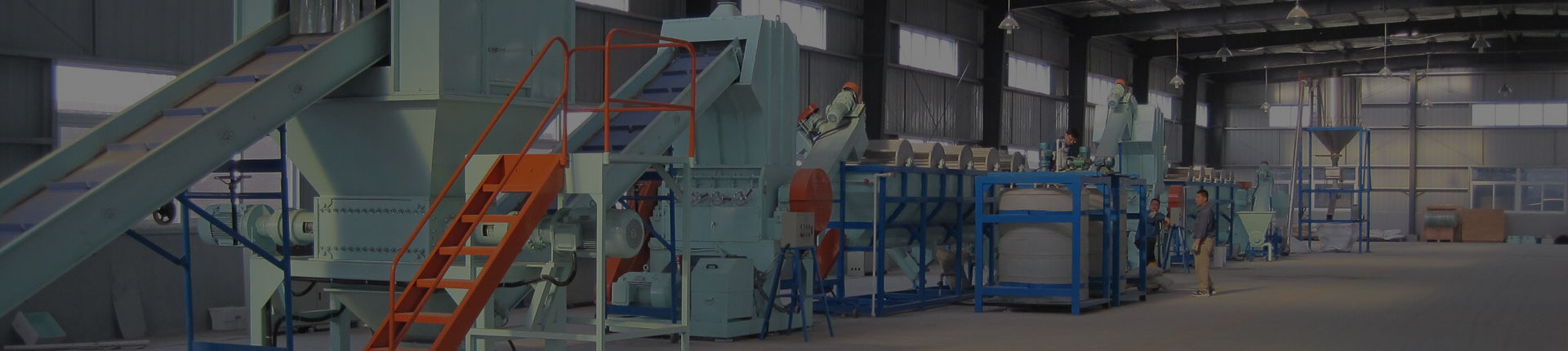
The better approach is to define your target market first — direct food contact, or a lower-specification application — and then specify the whole flow. A Plastic Recycling Machine Line engineered as one system gives you a process you can actually put forward for evaluation, rather than a set of components with no common validated parameters.
FAQ — Frequently Asked Questions
What decontamination efficiency does a PET recycling process need?
There is no single pass number. Efficiency is reported per surrogate compound, and published EFSA evaluations show results from roughly 96% to above 99.9% depending on the substance. What matters is whether the residual concentration after your process keeps modelled dietary exposure within the regulatory threshold for your intended use.
Is a decontamination system the same as an SSP reactor?
No, though they overlap. Decontamination removes absorbed contaminants using heat, vacuum, or gas flow, and residence time. SSP does that while also rebuilding molecular weight to restore IV. In food-grade PET lines,nes the SSP step is often the critical control step for decontamination efficiency, which is why the two functions are frequently combined in one unit.
How much does a food-grade PET decontamination system cost?
Cost depends on capacity, whether vacuum or nitrogen sweep is used, and how much SSP residence time you need. Vacuum systems carry higher capital cost but lower operating cost, and they suit decontamination-intensive lines. A complete food-grade flake line typically runs from around $200,000 to well over $1 million, so compare total validated throughput rather than equipment price alone.
Conclusion
A PET Flakes Decontamination System is not a premium washing machine, and buying one does not by itself make your pellets food-grade. The authorisation attaches to your process and your facility;ity, the decontamination step has to be validated against a challenge test, and the IV it consumes has to be restored before the pellets meet specification.
Zhangjiagang Lianda Machinery builds PET flake decontamination systems, SSP units, and complete Plastic Recycling Machine Lines. Tell us your target end use and capacity, and our engineers will map the configuration and the process parameters you will need. Contact us today for a free consultation and equipment quote.
Post time: Sep-29-2026