
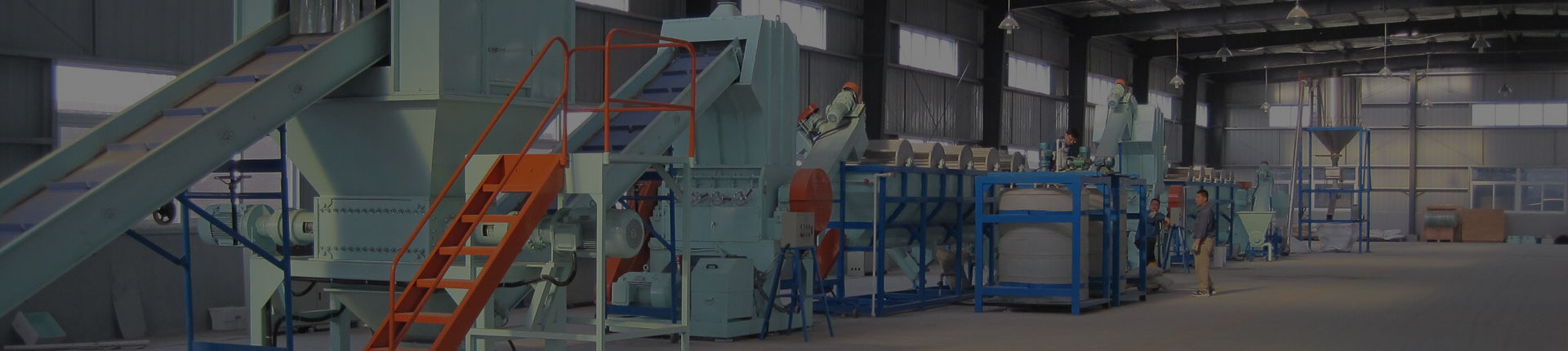
If you work in agriculture or plastic recycling, you’ve likely seen large amounts of used mulch film left behind in the fields. These films are often covered in mud, grass, and even small stones, making them very difficult to process.
How do you turn this dirty waste film into clean, valuable plastic material? It requires a well-designed and stable mulch film washing recycling line.
At LIANDA MACHINERY, we never stop updating, improving, and upgrading our equipment. Over the years, this commitment has helped us build a complete and mature recycling system. Today, let’s take this system as an example and walk through the key features of a high-capacity film recycling line.
Highlight 1: Pre-Treatment System — Remove Sand First to Protect Core Equipment
The biggest challenge in recycling mulch film is the sand and dirt. If these hard materials enter the crusher directly, the blades will wear out quickly.
The first step in the LIANDA production line is designed specifically to solve this problem.
▸Hydraulic Shearing Pre-Cutter: First, the long rolls of film are cut into short pieces to prepare for the next stage.
▸Core Equipment: Sand Remover: This is one of our patented technologies for the agricultural film recycling sector.
How it works: It uses air pressure to separate the lightweight plastic film from heavy materials like sand, stones, and grass.
Key Advantage: The entire process works without water. This not only removes sand efficiently but also protects the crusher blades, extending the life of the entire production line and reducing water usage in the washing stage. It’s a true “protect first, process later” approach.
Highlight 2: Crushing & Washing System — The Secret to Saving Energy and Boosting Efficiency
After pre-treatment, the film enters the core washing stage. Since LDPE film is tough and tends to tangle easily, a mature production line must have targeted improvements.
▸Film Crusher:
Exclusive Design: We use a double V-shaped blade frame and a back-knife structure. The result? Under the same energy consumption, output is doubled, helping you save significantly on electricity costs.
Wet Crushing: Water is added during the crushing process. This serves two purposes: it provides an initial wash and helps cool down the blades.
▸Forced High-Speed Friction Washer:
This machine runs at speeds of up to 1250 rpm. Through intense friction, it thoroughly removes dirty water and remaining impurities from the film surface. The screw shaft is specially designed for film materials, ensuring stable operation without jamming.
Highlight 3: Rinsing & Separation System — The Smart Way to Save Water
The sand and dirt washed off the film need to be removed quickly, or they will affect the cleaning quality.
▸Floating Washer (Rinsing Tank):
“V” Shape Bottom Design: This is a very practical water-saving feature in a mature production line. The bottom of the tank is shaped like a “V” and equipped with multiple conical slag discharge valves.
How does it save water? When too much sediment builds up at the bottom, the operator simply opens the valves, and the sand is discharged without changing the entire pool of water. This small design can save customers a large amount of water every year.
Efficient Discharge: A chain-plate reverse digging method is used for discharging material. It is stable and efficient, avoiding the clogging problems common with traditional methods.
Highlight 4: Final Drying System — Perfect Preparation for Pelletizing
Even after washing, the film is still wet and cannot be used directly for pelletizing. The Film Squeezing Pelletizing Dryer is the key machine that solves this problem.
▸Combines Drying and Semi-Plasticizing:
How it works: Through powerful screw squeezing, mechanical energy is converted into heat. The film is dewatered and simultaneously heated by friction until it becomes semi-plasticized. Finally, it is cut into particles that look like popcorn.
Excellent Results: The final material moisture content can be reduced to about 2%.
Core Value: These semi-plasticized particles take up less space and are much easier to feed into the extruder. This increases the capacity of the downstream pelletizing line and ensures the quality of the final plastic pellets is stable.
A Complete and Mature Recycling System
These four key features do not work alone. Together, they form a complete recycling system. From raw material to finished pellets, the entire process is closely linked:
Dirty Mulch Film → Pre-Cutting → Dry Sand Removal → Wet Crushing → High-Speed Friction Washing → Floating Rinsing → Squeezing Drying → Pelletizing → Finished Pellets
If you are looking for a globally proven, stable, and reliable mulch film recycling solution, the professional team at LIANDA MACHINERY is ready to provide you with customized service.
Post time: Mar-19-2026